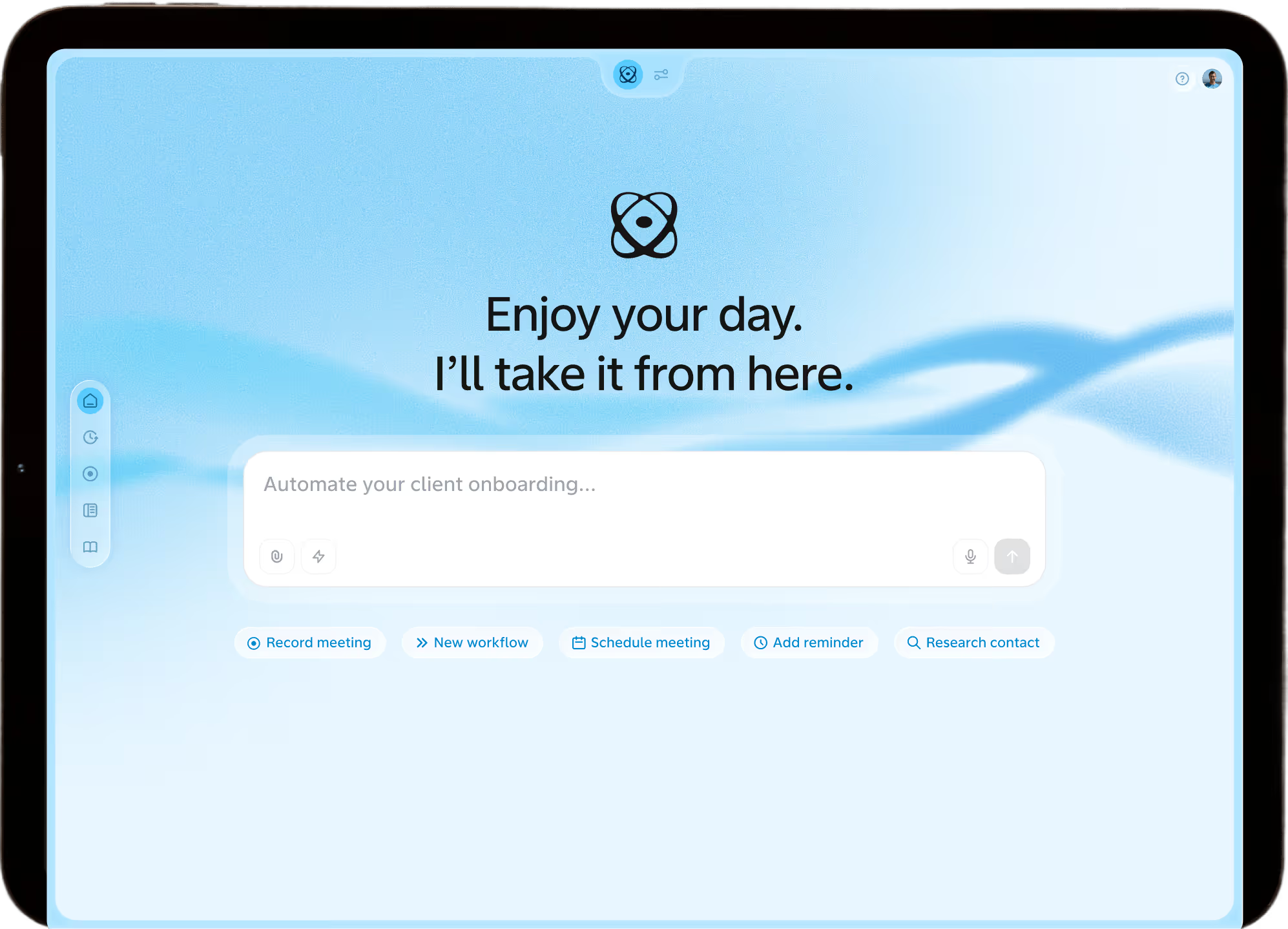
Why Advisors Using Claude Don't Want a Second App for Client Data
August 6, 2026

An advisor is mid conversation with Claude, drafting a client email, when a compliance question comes up about a meeting from three weeks ago. Answering it means closing that window, opening Quin, searching the transcript, then copying the answer back over. By the time the advisor returns, the original train of thought is gone.
What Tends to Get Missed
- The context switch has a real cost. Every trip out of Claude to check a calendar entry or CRM note breaks the flow of the task at hand.
- Firms standardize on one AI assistant for a reason. Teams built around Claude for drafting and client work should not need a second tool for meeting or contact data.
- Manual copy and paste introduces errors. Moving a name, date, or account detail by hand between two apps is exactly where mistakes creep in.
- Not every AI assistant needs the same access. A firm using Claude for one purpose and another tool for something else needs to grant and remove access separately.
- Raw data still has to come from somewhere. An AI assistant is only as useful as what it can see, and a calendar it cannot reach limits what it can help with.
How Quin Handles It
Quin connects to Claude through the Model Context Protocol, or MCP, which lets any MCP compatible AI assistant call on Quin's tools directly. Once connected, calendar, CRM, and contact data become available to ask about from inside Claude itself, without a separate login or browser tab.
Picture a solo advisor mid conversation with Claude about how to phrase a follow up to a prospect. Before sending it, she needs to know the last time they spoke and what came up. Instead of switching over to Quin, she asks Claude directly, and the meeting history comes back in the same conversation. The email gets finished without a detour.
The same connection works for updates, not just lookups. A plain language request inside Claude to log a note or update a CRM field works the same way it would from inside Quin itself. Quin does not take over the conversation, it adds its tools and data to the assistant already running, so the advisor stays in one place for both the thinking and the recordkeeping. For a firm that has decided Claude is where the day happens, that keeps the CRM from slowly falling behind.
Best Practices
- Start with read only tasks. Get comfortable pulling calendar and meeting information into Claude before asking it to update records.
- Give each AI client its own connection. A separate API key for Claude keeps that access distinct from any other assistant connected to Quin.
- Review what is connected on a regular basis. Access can be revoked individually, so cleanup does not disrupt anything else.
- Keep requests specific. A plain language request that names the contact, date, or field gets a more reliable result than a vague one.
Setting It Up
Turning this on takes only a generated API key, which Claude or any other MCP compatible client uses to authenticate with Quin. That key can be created, scoped, and revoked without touching any other connection tied to the account. The setup screen for this lives in the Quin account, under Settings, then Integrations.
#skills