Getting Every ClickUp Task Into the Right List
August 6, 2026

Every follow-up from every meeting lands in the same ClickUp list, whether it's a marketing request, a client deliverable, or a bug report. Someone has to open that list each morning and drag tasks to where they belong, and on a busy week that never happens, so three teams end up hunting through one crowded backlog for their own work.
The problem isn't that tasks aren't getting created. It's that they're all landing in one place, regardless of what they're about.
What Organized ClickUp Task Routing Looks Like
- Client work separated from internal work. A follow-up about a client deliverable belongs in that client's List, not mixed in with internal planning tasks.
- Tasks grouped by the project they support. A Q4 campaign task and a website redesign task shouldn't compete for space in one generic list.
- Tags that mean something. Consistent tagging lets a team filter a crowded Space down to the tasks relevant to them.
- A named owner for the sorting rules. Someone stays responsible for updating routing as new projects start, rather than leaving the default in place indefinitely.
How Quin Routes Tasks Without Manual Sorting
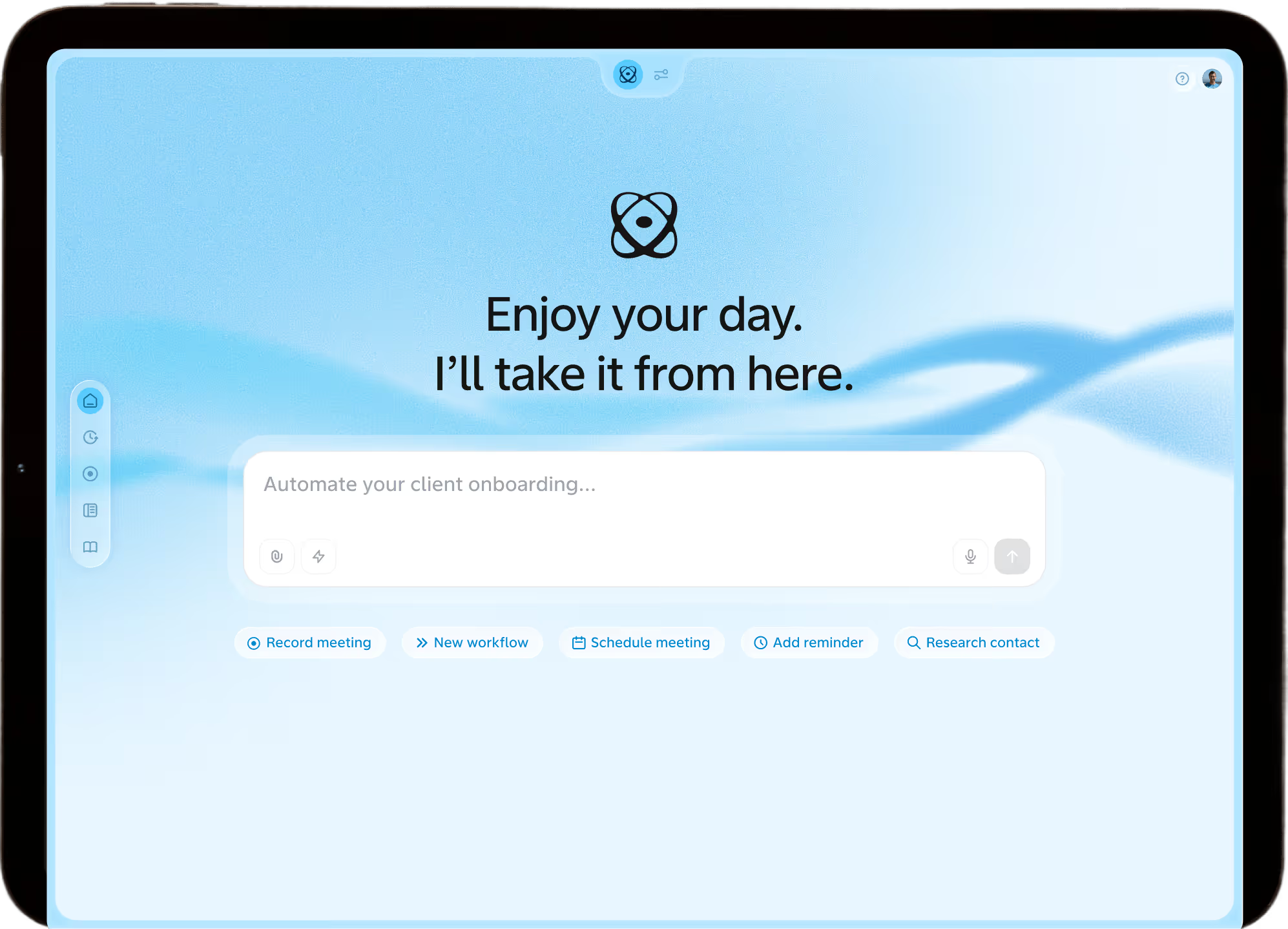
Quin reads Guidelines to decide where a new task belongs before it's created. A Guideline like "Always add marketing tasks to the Q4 Campaign list" tells Quin exactly which List to use, and a similar instruction can point client follow-ups to a client-specific Space. Tags layer on top to keep a shared Space filterable by type of work.
This happens as part of the same step that generates the task: Quin identifies the commitment, pulls the due date, and places it in the List a Guideline points to, without someone reopening ClickUp to move it. Without a matching Guideline, the task lands in the default workspace set during setup, a known place to check rather than a scattered outcome.
Picture an agency running client calls back to back across five accounts. Without routing rules, every follow-up piles into one shared list, and account managers spend Monday morning untangling whose task belongs where. With a Guideline for each client, a follow-up from Tuesday's call lands directly in that client's List, next to the rest of their open work.
A backlog sorted by nature is a backlog people trust enough to check regularly. When tasks land in a shared, unsorted list, team members start relying on memory instead of ClickUp, which defeats the point of tracking follow-ups there at all.
Best Practices
- Write Guidelines specific to categories of work. A rule for "marketing tasks" or "client follow-ups" gives Quin a clear signal instead of a catch-all default.
- Set the default workspace and project deliberately. This becomes the fallback destination for anything a Guideline doesn't cover.
- Review Guidelines when a new List or Space gets added. Routing rules need updates as structure changes, or tasks keep landing in outdated places.
- Pair routing with tags for extra filtering. A List handles broad sorting, and tags handle the finer distinctions within it.
Setting It Up
Connect ClickUp under Settings, then Integrations, select Add Integration, and choose ClickUp. Authenticate the account, set a default workspace and project, and grant permissions when prompted. Next, add Guidelines describing how different categories of tasks should be routed, so new follow-ups land in the right List from the first meeting Quin joins.
#skills